
WELCOME BONUS 300%
UP TO €2000 + 100
FREE SPINS
UP TO €2000 + 100
FREE SPINS
Home → Blackjack
Blackjack at 1Xslots Casino: Variants, Rules and Payouts
Blackjack Payout 3:2 Explained in Detail
The Blackjack Liberal Vegas Strip variant offers a standard payout of 3:2, which translates to a theoretical return of 99.72% RTP for the player base. This specific ratio ensures that a winning blackjack hand returns 150 EUR on a 100 EUR wager, significantly outperforming tables using inferior 6:5 structures. Players relying on basic strategy can expect a minimal house edge of just 0.28%, making this one of the most favorable conditions available in modern online gaming environments today.
Switching to a 6:5 payout structure drastically alters the financial outcome, as a 100 EUR bet yields only 120 EUR instead of the standard 150 EUR upon success. This reduction adds exactly 1.39 percentage points to the casino's advantage, pushing the overall house edge up to 1.85% and dropping the RTP down to 98.15%. Such a significant penalty makes these tables mathematically inferior, discouraging disciplined players who prioritize long-term value over superficial game variety or marketing hooks.
In contrast, the Infinite Blackjack table by Evolution maintains the lucrative 3:2 payout while offering an RTP of 99.47% with unlimited seating capacity at all times. This configuration allows players to benefit from liberal rules without sacrificing the generous payout ratio that defines optimal blackjack strategy execution across thousands of hands played. The consistent application of 3:2 ensures that bankroll management remains predictable, unlike variable payout games that introduce unnecessary volatility into standard strategic calculations.
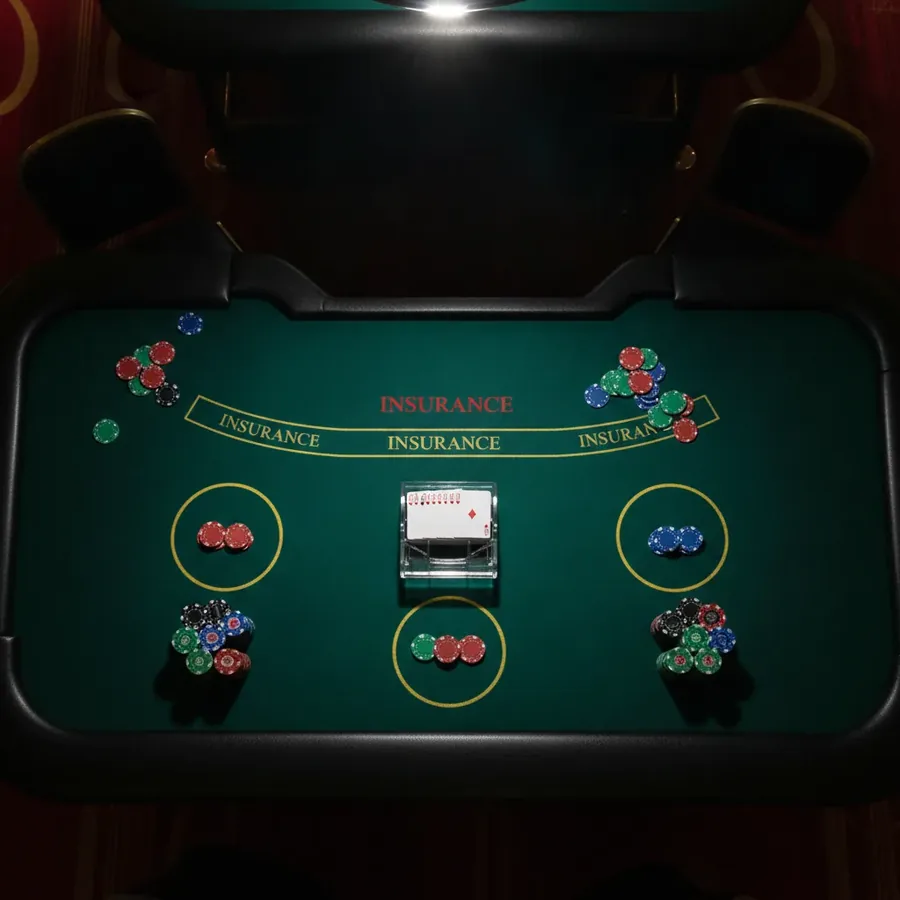
Insurance bets offer a separate 2:1 payout but carry a heavy house edge of 7.47%, rendering them statistically poor wagers for those adhering to strict mathematical guidelines. Accepting insurance when the dealer shows an ace reduces overall profitability unless the player possesses advanced card counting skills to identify positive true counts above plus three. Avoiding this side bet preserves the core 3:2 advantage, ensuring that the primary game mechanics remain focused on beating the dealer through optimal decision-making processes.
Blackjack doesn't count for every bonus offer
The 300% welcome bonus up to €2,000 requires full wagering compliance before any withdrawal occurs, yet table games contribute only 10% toward meeting these turnover requirements. This low contribution rate means that playing Blackjack significantly slows progress compared to slot games, which contribute 100% per wagered euro to the bonus clearing process. Consequently, a €100 stake at a blackjack table effectively counts as merely €10 toward the total volume needed to unlock withdrawn funds safely.
Comparing the contribution percentages reveals a stark efficiency gap between game types, where slots offer ten times the acceleration toward bonus clearance than blackjack tables do. A player wagering €500 on slots completes half the required turnover immediately, whereas the same amount staked on blackjack advances the goal by only €50. This structural disparity forces strategic players to balance their gameplay preferences against the practical necessity of clearing bonuses efficiently within the allotted timeframes.
The Blackjack Surrender rule improves RTP by approximately 0.08 percentage points but does not alter the fundamental 10% contribution weight assigned to table games in bonus terms. Even with favorable rules like late surrender reducing the house edge, the mathematical disadvantage regarding bonus conversion remains unchanged regardless of specific table variations chosen. Players must recognize that rule optimizations cannot compensate for the systemic restriction placed on table game contributions during promotional periods.
Lightning Blackjack by Evolution features multipliers up to 25x but still falls under the restricted 10% contribution category for the welcome bonus wagering requirements. The high-variance nature of lightning multipliers does not exempt the game from the standard table game classification used by the operator for bonus tracking systems. Understanding this limitation helps players avoid wasting valuable bonus funds on high-entertainment-value games that yield negligible progress toward withdrawal eligibility thresholds.
Bonus conditions often exclude Blackjack completely
While some promotions include table games, others explicitly exclude Blackjack variants entirely, forcing players to utilize slots for the entire 300% welcome bonus up to €2,000 wagering requirement. This exclusion policy eliminates the possibility of using low-house-edge strategies to clear bonuses, as slots typically possess higher theoretical hold percentages than optimized blackjack tables. Players seeking to maximize value must therefore adjust their expectations regarding which games can legally participate in the promotional framework provided.
The Blackjack Party table by Evolution operates with a minimum stake of 1.00 EUR and maximum of 1.000 EUR, yet such limits are irrelevant if the game is excluded from bonus play. Even when included, the 10% contribution rate effectively doubles the wagering burden compared to unrestricted slot play, creating a significant barrier for bonus hunters. This structural disadvantage means that players focusing on table games must deposit substantially more capital to achieve the same bonus clearance status as slot-focused competitors.
Specific rule sets like H17 increase the house edge by 0.22 percentage points, further diminishing the already modest 10% contribution value offered by table games in bonus scenarios. When combined with exclusion clauses found in certain promotional terms, these mathematical disadvantages render blackjack an inefficient vehicle for converting free spins or match deposits into withdrawable cash. Strategic players should carefully review terms to determine if their preferred table games remain eligible for participation in ongoing promotional campaigns.
Early surrender rules, though rare, could theoretically improve RTP by up to 0.6 percentage points, yet such benefits are nullified if the game contributes zero percent to bonus turnover. Without any contribution weight, even the most favorable rule combinations fail to provide any progress toward unlocking the 100 free spins attached to the welcome package. This absolute exclusion creates a binary outcome where players must choose between optimal game theory and promotional accessibility, rarely achieving both simultaneously.
Six Card Charlie Pays Immediately with Six Cards
A six-card Charlie rule awards an automatic win if a player draws six cards without busting, bypassing the need to compare totals with the dealer's final hand entirely. This specific condition significantly boosts the player's expected value by reducing the frequency of pushes and losses in extended hand sequences involving multiple hits. Tables featuring this rule often compensate with slightly less favorable dealer stand rules, requiring careful analysis of the net impact on overall RTP calculations.
Standard Blackjack Liberal Vegas Strip rules do not typically include a six-card Charlie provision, focusing instead on the traditional 3:2 payout and liberal split/double options. Introducing such a rule would likely reduce the house edge below the current 0.28% benchmark, potentially altering the competitive landscape among different online casino offerings. Players seeking this advantage must specifically seek out tables explicitly advertising this feature, as it is not a standard component of mainstream blackjack variants offered by major providers.
Evolution's Infinite Blackjack offers an RTP of 99.47% but relies on standard winning conditions rather than automatic wins for extended hands like six-card Charlies. The absence of this rule means players must rely strictly on reaching a total closer to twenty-one than the dealer without exceeding twenty-one points. This distinction highlights the difference between rule-based advantages and probability-based outcomes, influencing how players approach risk management during lengthy sessions.
Side bets like Any Pair or 21+3 in Infinite Blackjack operate independently of the main hand outcome, including potential six-card Charlie scenarios, which do not affect their payout structures. These auxiliary wagers carry their own distinct house edges and RTP values, separate from the main game's 99.47% return calculation. Players interested in maximizing overall returns must evaluate whether the entertainment value of side bets justifies their mathematical disadvantage relative to the core game mechanics.
One Deck vs Eight Decks in House Edge
One-deck blackjack games offer a superior house edge of 0.15% compared to the 0.46% found in six-deck versions, primarily due to reduced card composition variance. This improvement stems from the fact that fewer decks make it easier for players to predict remaining card distributions, enhancing the effectiveness of basic strategy applications. However, single-deck games frequently offset this advantage by implementing restrictive rules or lower payouts, such as 6:5 blackjacks, which negate the deck count benefit entirely.
Eight-deck shoes are common in many live dealer settings, including Evolution's Infinite Blackjack, which achieves an RTP of 99.47% despite the inherent disadvantage of increased deck numbers. The larger number of cards dilutes the impact of removed high-value cards, making card counting less effective and increasing the house edge compared to single-deck alternatives. Players adapting to multi-deck games must rely strictly on rigid basic strategy adherence to minimize losses over extended playing periods.
The difference in house edge between one deck and eight decks amounts to 0.31 percentage points, representing a substantial long-term cost difference for high-volume players. Over millions of hands, this discrepancy translates to significantly higher expected losses in multi-deck games, assuming identical betting patterns and rule sets otherwise. Savvy players often seek out single-deck variants with fair payouts to capitalize on the mathematical advantage provided by smaller shoe sizes.
Six-deck games like the standard Liberal Vegas Strip variant sit between single and eight-deck extremes, offering a balanced compromise with a 0.46% house edge. This middle-ground configuration provides sufficient randomness to prevent easy counting while maintaining manageable complexity for basic strategy execution. Players choosing six-deck tables should ensure the presence of favorable rules like DAS and S17 to keep the edge as low as possible within the constraints of the deck size.
Blackjack variants at a glance
| Variant | Payout | House edge | Rule | Bet range |
|---|---|---|---|---|
| Blackjack Split / Double / H17 – Regel-Effekte | n.a. (Regel-Modifikatoren) | H17 +0.22 Prozentpunkte; RSA −0.08 Prozentpunkte; DAS −0.14 Prozentpunkte | Dealer Hits Soft 17 verschlechtert RTP um 0.22 Prozentpunkte; Resplit Aces verbessert um 0.08 Prozentpunkte; Double After Split verbessert um ca. 0.14 Prozentpunkte; 6 Decks statt 8 – ca. 0.02 Prozentpunkte. | Double – Einsatz ×2 mit einer Karte; Split – bis 4 Hände; Ass-Split meist mit einer Karte. |
| Blackjack Ein Deck, klassische Regeln, 3:2 | 99.85% | 0.15% | Weniger Decks = niedrigerer Vorteil; ein Deck gibt ca. −0.48 Prozentpunkte gegenüber 8 Decks. Oft durch 6:5 Auszahlung kompensiert. | Blackjack 3:2, Gewinn 1:1 |
| Blackjack Insurance / Versicherung (6–8 Decks) | 92.53% | 7.47% | Separate Nebenwette bis 50% der Hauptwette, wenn der Dealer ein Ass hat. Basisstrategie schreibt IMMER Ablehnung vor (außer Karten zählen bei True Count ≥ +3). Bei einem Deck Vorteil ≈ 5.88% | Insurance 2:1 |
| Blackjack Surrender (Late Surrender) – Regel-Effekt | n.a. (Regel-Modifikator) | −0.08 Prozentpunkte | Spieler gibt Hand nach Dealer-Blackjack-Prüfung auf, verliert die Hälfte des Einsatzes. Verbessert RTP um ca. 0.08 Prozentpunkte. Early Surrender ist wesentlich wertvoller (bis −0.6 Prozentpunkte), aber extrem selten. | Rückzahlung 50% des Einsatzes |
| Blackjack Liberal Vegas Strip (liberale Regeln, 3:2) | 99.72% | 0.28% | Günstigste Regelkombination: S17 + DAS + Resplit + Late Surrender. Standardabweichung 1,15 | Blackjack 3:2, Gewinn 1:1 |
| Blackjack 6 Decks, S17, DAS, DOA, Auszahlung 3:2, Basisstrategie | 99.54% | 0.46% | Dealer steht auf Soft 17; Verdopplung auf jeder Zweierkarte; Verdopplung nach Split erlaubt; keine Aufgabe. Basisstrategie ist für diesen Wert zwingend | Blackjack 3:2, normaler Gewinn 1:1, Insurance 2:1 |
Splitting costs double bet: plan budget
The Blackjack Split mechanic allows players to divide a pair into two separate hands, requiring a second wager equal to the original stake. This rule effectively doubles the immediate financial exposure per hand, which directly impacts the total bankroll required for a session. A player starting with 100 EUR must account for potential splits increasing the active bet to 200 EUR instantly. Proper budget planning is essential to withstand the variance created by these additional mandatory bets during gameplay.
Resplitting Aces further intensifies the cost structure, as each new Ace-hand requires another full bet. The rule RSA improves the RTP by 0.08 percentage points, but the upfront cash requirement remains high. Players must ensure their deposit covers multiple simultaneous hands if they frequently split pairs like 8s or Aces. Without sufficient funds, the ability to utilize this strategic advantage is limited by the available balance in the account.
Infinite Blackjack offers unlimited seats but does not alter the fundamental doubling cost of splitting cards. The minimum bet of 1 EUR sets a low floor, yet splitting raises it to 2 EUR per new hand. Evolution provides this table where side bets are optional, keeping the core blackjack mechanics standard. Understanding that every split increases the hourly loss rate is crucial for managing long-term expectations at the table.
Latency under 2 seconds at the live table
Lightning Blackjack features multipliers up to 25x on winning hands, creating a dynamic environment that demands precise timing from participants. The game operates within a specific latency window, ensuring that card distribution and multiplier applications occur swiftly. Players placing bets must react quickly before the dealer locks the round, typically within a short countdown period. Fast connection speeds are necessary to avoid missing the betting window due to network delays during these high-stakes moments.
Infinite Blackjack utilizes four distinct side bets including Any Pair and Hot 3, which add complexity to the decision-making process. The table supports a maximum bet of 5,000 EUR, requiring robust infrastructure to handle large data streams without lag. Evolution ensures that the visual feed and audio cues remain synchronized with the dealer's actions for an immersive experience. Latency issues could disrupt the flow, making real-time strategy execution difficult for users with unstable internet connections.
Blackjack Party introduces a festive atmosphere with two moderators, adding a social layer to the technical performance requirements. The betting range spans from 1.00 EUR to 1,000 EUR, accommodating various player preferences for risk levels. The host interactions do not affect the underlying game logic, but they contribute to the overall engagement metrics. Maintaining a stable connection is vital to ensure that all participants see the same game state simultaneously without interruption.
Double Down after Split: which tables allow it
Blackjack 6 Decks permits Double After Split (DAS), allowing players to double their bet even after dividing a pair into two hands. This rule reduces the house edge by approximately 0.14 percentage points compared to tables prohibiting DAS. Players can double down on any two-card hand post-split, providing more opportunities to capitalize on favorable situations. Utilizing this option correctly is a key component of the basic strategy for maximizing long-term returns at this variant.
Blackjack Liberal Vegas Strip also includes liberal rules such as Resplit and Late Surrender, enhancing the player's strategic options. The combination of S17, DAS, and other favorable conditions results in a house edge of just 0.28 percent. This low edge makes it one of the most advantageous environments for skilled players seeking to minimize losses. The standard deviation of 1.15 indicates moderate volatility, balancing risk and reward effectively for consistent play sessions.
In contrast, some variants restrict doubling only to initial hands, significantly impacting the expected value of split pairs. The absence of DAS increases the house edge, forcing players to rely more heavily on hitting or standing. Checking the specific rule set before joining a table is essential to determine if DAS is permitted. Tables offering DAS generally provide better long-term profitability for those who adhere strictly to optimal playing strategies.
Which rule variants does the software show?
Blackjack Insurance is a separate side bet available when the dealer shows an Ace, paying out at 2:1 odds. This bet carries a high house edge of 7.47 percent, making it statistically unfavorable for most players. Basic strategy dictates always declining insurance unless counting cards reveals a true count of plus three or higher. Accepting this offer regularly erodes the bankroll faster than adhering to the primary game rules and objectives.
Blackjack Ein Deck uses classical rules with a 3:2 payout, offering a superior RTP of 99.85 percent. Having fewer decks reduces the house advantage by approximately 0.48 percentage points compared to eight-deck shoes. However, casinos often compensate by reducing the blackjack payout to 6:5, which drastically increases the house edge to 1.85 percent. Players must verify the payout ratio to ensure they are not inadvertently playing on less favorable terms despite the single deck.
Blackjack 6 Decks with S17 and DAS offers a balanced approach with an RTP of 99.54 percent. The dealer stands on soft 17, which benefits the player by preventing the dealer from improving weak hands. Doubling on any two cards and after splits adds significant strategic depth to the gameplay experience. These combined rules create a fair environment where skillful play can yield positive returns over extended periods of activity.
Soft 17: Dealer Hits or Stands
When the dealer hits on Soft 17 (H17), the house edge increases by 0.22 percentage points compared to standing rules. This rule change forces the dealer to draw another card, potentially busting or improving their hand unpredictably. Players facing H17 dealers must adjust their basic strategy slightly, often opting to stand on lower totals against dealer up-cards. The increased risk for the casino translates directly into a higher expected loss for the player over time.
Blackjack 6 Decks specifies that the dealer stands on Soft 17 (S17), which is a more favorable condition for participants. Standing prevents the dealer from drawing unnecessary cards that could lead to a bust or a stronger final hand. This rule contributes to the lower house edge of 0.46 percent observed in this specific variant configuration. Adhering to strict basic strategy under S17 rules maximizes the potential return while minimizing the inherent statistical disadvantage.
Late Surrender allows players to forfeit half their bet after the dealer checks for blackjack, improving RTP by 0.08 percent. This rule is particularly valuable when holding a weak hand against a strong dealer up-card like an Ace or Ten. Early surrender is rarer but offers greater benefit, reducing the edge by up to 0.6 percent. Combining S17 with late surrender creates one of the most player-friendly environments found in modern online casino offerings.
Check table limit before the first bet
Blackjack Party at Evolution operates within a strict betting range of 1.00 EUR to 1,000 EUR per hand. This ceiling is significantly lower than the maximum stakes found at Infinite Blackjack, which accommodates wagers up to 5,000 EUR for high-volume players. Beginners must verify their bankroll against these limits to avoid rejection of valid bets during gameplay.
Lightning Blackjack offers a middle-ground stake window, accepting bets between 1 EUR and 2,500 EUR per round. The house edge remains consistent at 99.56% RTP across these live tables, meaning the financial risk scales directly with the chosen entry point. Players should calculate how many hands fit within their daily budget before selecting a specific dealer stream.
Standard software variants often feature minimums as low as 0.20 EUR, contrasting sharply with the 1.00 EUR floor at all listed live studios. This higher threshold excludes casual players who prefer micro-stakes but protects the game integrity for professional participants. The bonus contribution rate for these tables is fixed at 10%, affecting how quickly promotional funds are cleared.
Unlimited seats via a split dealer hand
Infinite Blackjack utilizes a split dealer hand mechanism to accommodate an unlimited number of participants simultaneously. This structural difference eliminates the queue times common in traditional studio games where only seven physical seats exist. Each player receives their own dedicated cards while sharing the same dealer shoe and outcome.
The theoretical return to player for this specific format stands at 99.47%, which is slightly lower than the 99.56% RTP offered by Lightning Blackjack. Despite the marginal difference in long-term expectancy, the unlimited seating allows beginners to observe strategies without pressure from other users waiting for a turn.
Side bets including Any Pair, 21+3, Hot 3, and Bust It are available to every connected participant regardless of seat count. These optional wagers carry distinct house edges that vary from the main game baseline, requiring careful bankroll management. The shared nature of the deal ensures that every seat wins or loses on the exact same dealer final hand.
Live stream with three cameras and OCR
Evolution studios deploy optical character recognition technology to automatically track card values and bet placements in real time. This system replaces manual chip counting, ensuring that every payout calculation aligns precisely with the rules displayed on screen. Beginners benefit from this accuracy as it removes human error from the verification process.
Multi-camera setups provide comprehensive views of the shoe, the discard rack, and the main playing area to guarantee transparency. The visual feed supports the mathematical integrity of the 99.47% RTP found in Infinite Blackjack by allowing independent auditing of the shuffle. This level of oversight is absent in standard desktop video slots which rely solely on certified random number generators.
The technical infrastructure supports a latency-free experience essential for making timely decisions on splits or doubles. While the visual presentation mimics a land-based casino, the underlying mechanics operate on centralized servers rather than local hardware. Players should ensure their internet connection can handle the continuous data stream required for these high-definition broadcasts.
Seat change at the Live Table in 20 seconds
Players can switch seats at Evolution live tables in approximately 20 seconds, allowing for flexible position changes during a session. This rapid transition capability prevents downtime when a preferred spot becomes occupied or when a player wishes to move away from a hot streak. The system handles the reassignment instantly without interrupting the ongoing deal.
This flexibility contrasts with rigid fixed-seat arrangements in older virtual blackjack versions where relocation requires reloading the entire client interface. Modern HTML5 integration enables seamless movement between the Infinite and Lightning variants without losing connection stability. Beginners can use this feature to test different dealer speeds or camera angles before committing to a single perspective.
The ability to reposition does not alter the fundamental house edge of 0.53% inherent to the Infinite Blackjack variant. Financial outcomes remain tied strictly to the mathematical probability of the dealt cards rather than physical location at the virtual felt. Users should note that seat availability is dynamic and depends entirely on the current number of active connections at any given moment.
Perfect Pairs vs 21+3 in House Edge
The 21+3 side bet combines the player's first two cards with the dealer's upcard to form poker hands like straights or flushes. This wager carries a significantly higher house edge compared to the main game, which typically sits around 0.53% for Infinite Blackjack. Beginners often mistake the frequent small payouts for true profitability without considering the long-term negative expectancy.
Perfect Pairs evaluates only the player's initial two cards for matches, offering separate payouts for perfect, colored, and mixed pairs. While both bets enhance entertainment value, they independently drain the bankroll faster than the base game alone due to elevated vig. The combined exposure increases variance, meaning win/loss swings become more dramatic over short sessions.
Strategic discipline requires treating these side bets as optional entertainment rather than integral components of a winning strategy. The main game RTP of 99.47% drops substantially if the player relies heavily on 21+3 or Perfect Pairs for returns. Allocating only a small fraction of the total buy-in to these side bets preserves capital for the core blackjack decision-making process.
Contact
Live - online chat
Banking





Providers





1Xslots Casino 2026